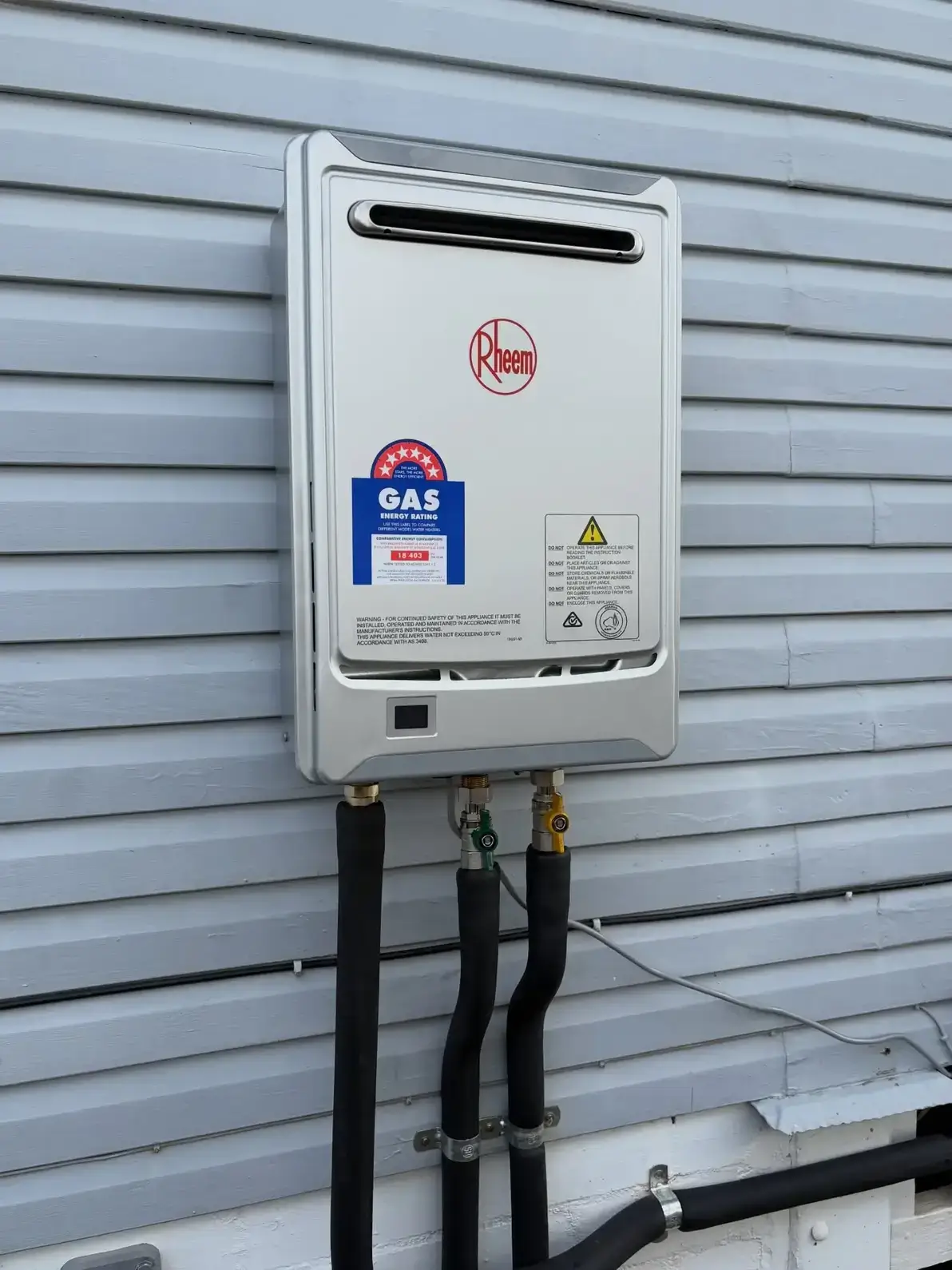
Rheem vs Rinnai vs Dux Hot Water Systems: Best Brand for Brisbane Homes
A homeowner standing in front of three brands at the hot water aisle, or three quotes from three different plumbers, asks the same question: which is actually the best? Rheem, Rinnai or Dux? Looking at them lined up, they all seem to do the same job.
They don't. Each brand has genuine strengths and genuine weaknesses, and the right answer depends on what type of hot water system you're buying. After installing Rheem, Rinnai and Dux units across Brisbane Northside, Moreton Bay and out into south-east Queensland for years, the honest plumber's answer is that there's a clear winner in each category, not one brand that wins them all.
This guide walks through how the three brands actually stack up: who's behind them, where each one excels, where each one falls short, and which brand you should choose based on the type of hot water system that's right for your home.
Table of contents
- Quick comparison: Rheem vs Rinnai vs Dux at a glance
- Rheem
- Rinnai
- Dux
- Best brand for electric storage hot water
- Best brand for gas storage hot water
- Best brand for continuous flow gas hot water
- Best brand for solar hot water
- Best brand for heat pump hot water
- Warranty comparison: which brand backs its products longest?
- Parts and service availability
- What plumbers actually install
- How to choose between Rheem, Rinnai and Dux
- When to call a Brisbane plumber
- Frequently asked questions
Quick comparison: Rheem vs Rinnai vs Dux at a glance
Before getting into the detail, here's how the three brands stack up across the categories that matter most:
- Rheem: Best overall range, made in Australia since 1939, strongest parts and service network, wins gas storage, solar and heat pump categories outright.
- Rinnai: Best continuous flow gas (Infinity range), strong extended heat exchanger warranties available on Infinity models, Japanese engineering with strong Australian distribution.
- Dux: Best value, strong on electric and gas storage tanks, Australian-made in Moss Vale NSW, owned by Noritz of Japan since 2015. If you want the short version, Rheem wins the most categories overall, Rinnai is the gold standard for continuous flow gas, and Dux is the practical value pick for storage replacements. The rest of this guide unpacks why.
Rheem
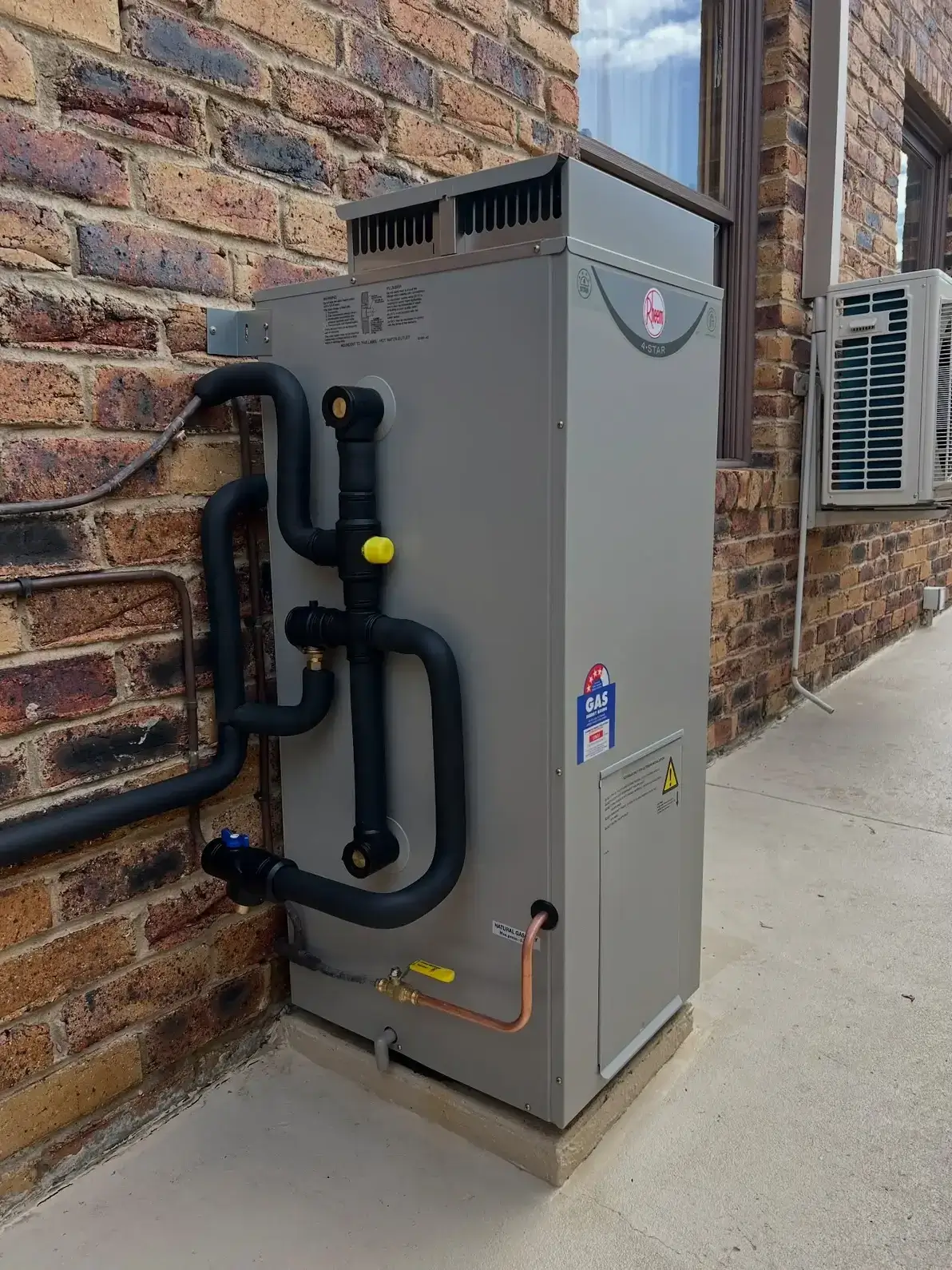
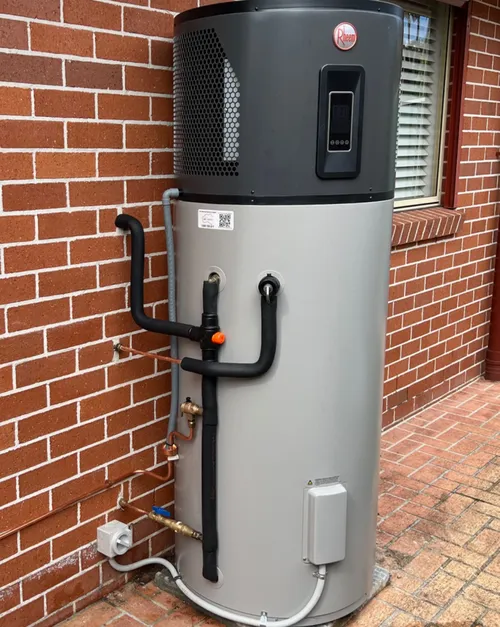
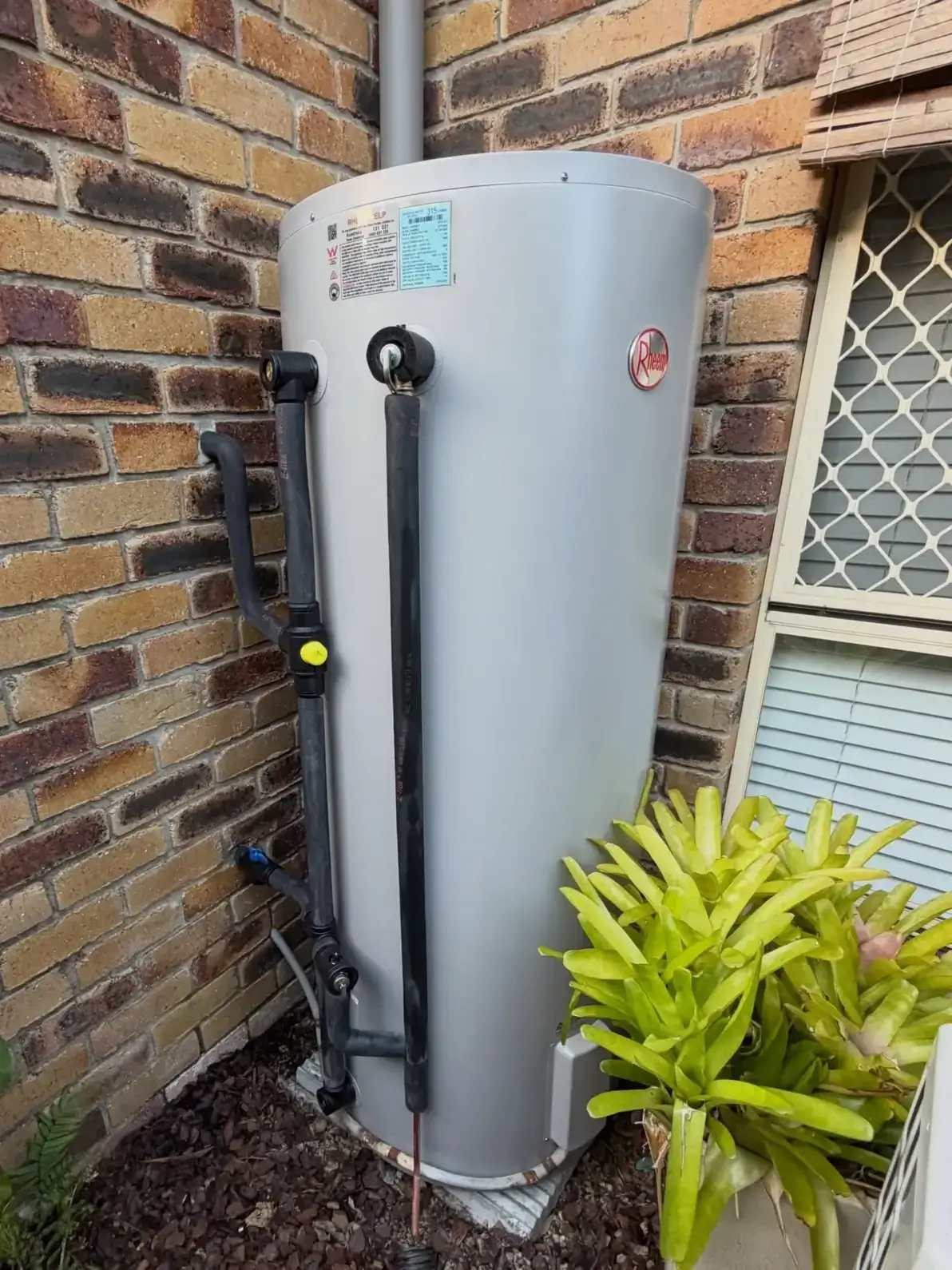
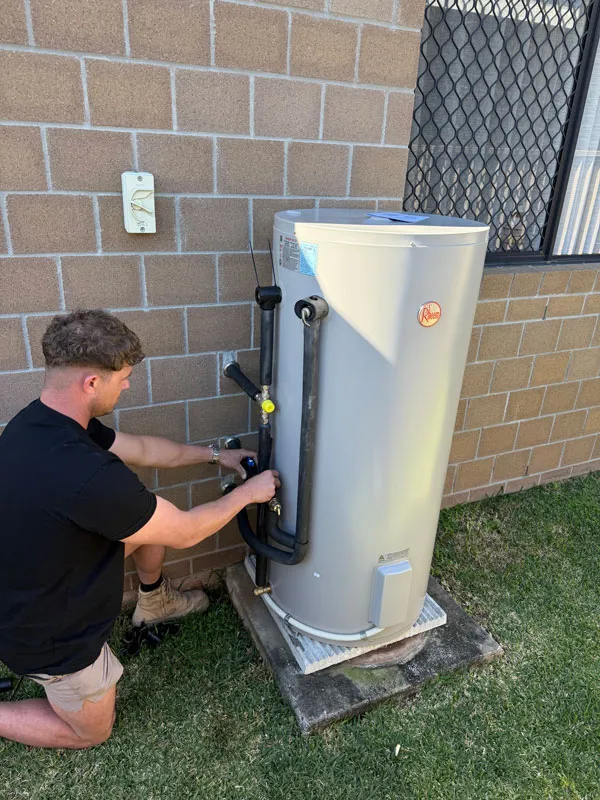
Rheem has been making hot water systems in Australia since 1939. Their main manufacturing operation is at Rydalmere in Sydney, and the brand has the largest market share of any hot water manufacturer in the country. Rheem also owns several other major Australian hot water brands, including Solahart (solar specialist), Vulcan (the old beige gas storage boxes from the 80s and 90s) and Aquamax.
What this means in practice is that Rheem makes everything. Electric storage, gas storage, gas continuous flow, solar, heat pump. Their range covers every type and capacity a typical Australian home would ever need. The Stellar gas storage range has been a long-standing benchmark in high-efficiency 5-star gas storage and an important product in the category's evolution. The AmbiHeat heat pump is Australian-made and is among the most efficient mainstream heat pumps on the Australian market.
What I notice on the job is two things that matter to homeowners but rarely show up in marketing.
First, parts availability. If a Rheem unit needs a thermostat, anode, element or gas valve, I can almost always get the part same-day from Reece or another major supplier. That matters when your hot water has died on a Friday afternoon and the family is coming over for the weekend.
Second, installer familiarity. Almost every Australian plumber has installed dozens of Rheem units. They know the quirks, the install pad sizes, the connection layouts, the warranty process. That familiarity translates to fewer install issues and faster servicing later.
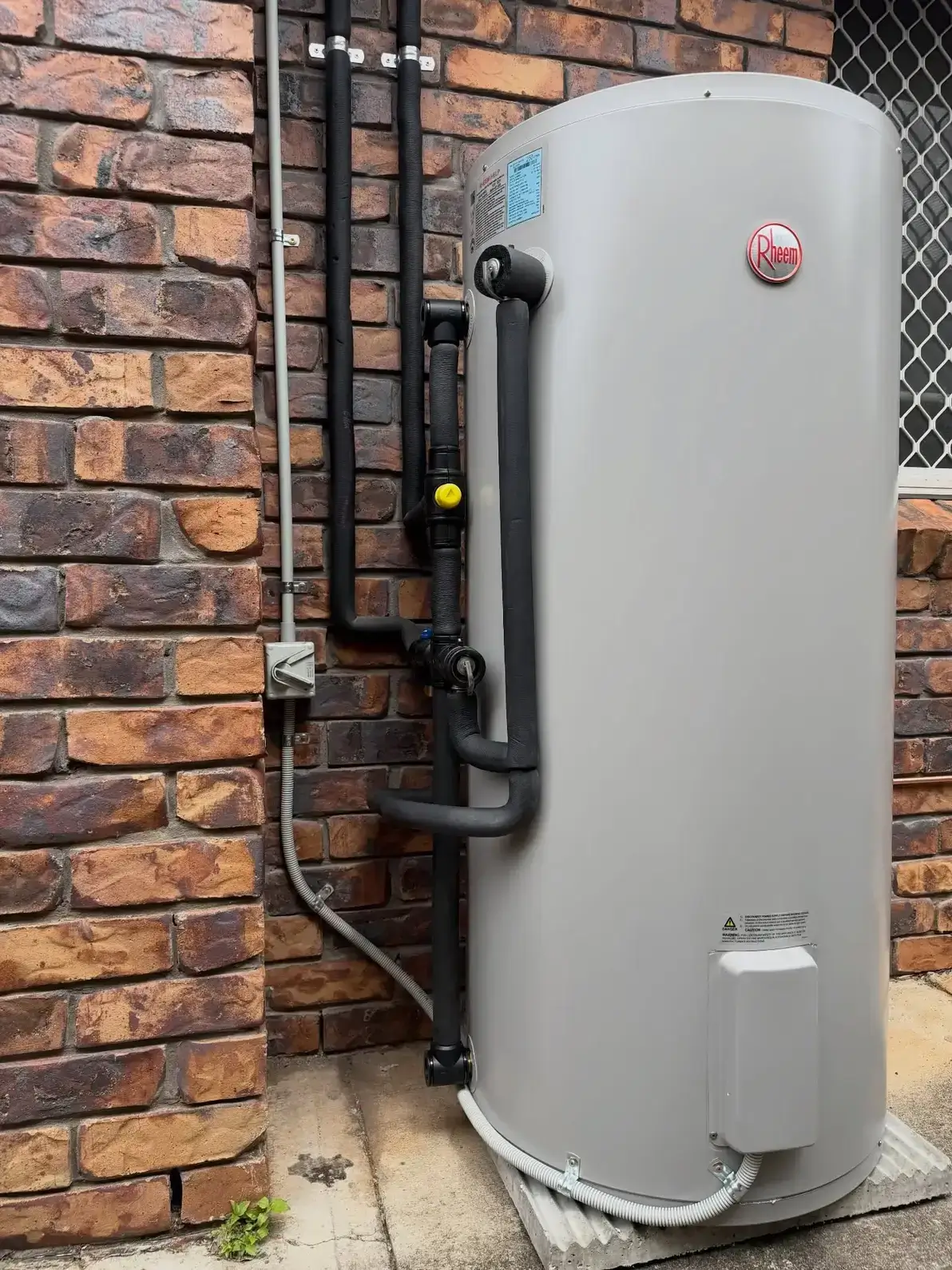
I serviced a Rheem electric storage unit at a property in Mitchelton last month that was installed in 2008. Eighteen years old. Still running. The anode had been replaced once, the thermostat once. The tank itself was sound. That's not unusual for a Rheem if it's been looked after.
Where Rheem isn't always the best pick: continuous flow gas. Their continuous flow range is solid, but it isn't the category benchmark in the way the Stellar is for gas storage or the AmbiHeat is for heat pump. For pure continuous flow performance, Rinnai still has the edge.
Rinnai
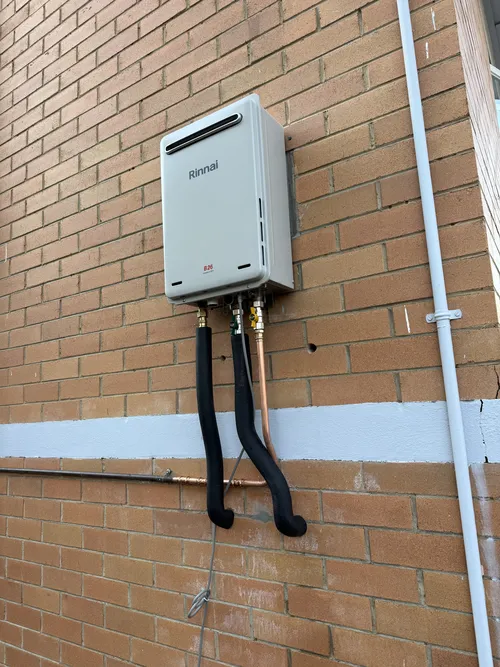
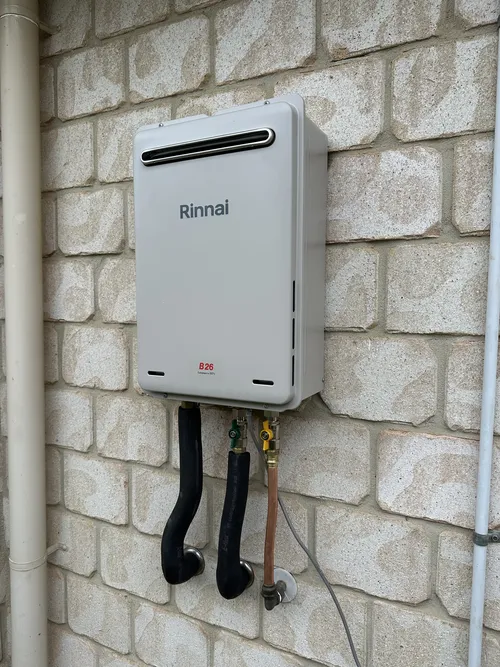
Rinnai is a Japanese company with its Australian operations based in Victoria. They effectively invented the continuous flow gas hot water category in Australia when the Infinity range hit the market in the early 1990s. Three decades later, the Infinity is still the unit most plumbers reach for when a homeowner wants a quality continuous flow gas install.
The current Infinity range covers the 16, 26, 28i (internal) and 32 litre per minute models, with the newer Infinity B series alongside them. The flagship feature is a 6-star equivalent energy rating across most models, low-emission burners, and the Puretemp temperature stability control that keeps the water steady even when flow rates change mid-shower.
The warranty position is genuinely strong. Rinnai offers a standard 3-year parts and labour warranty plus a 10-year heat exchanger warranty on most Infinity models. Extended heat exchanger warranties are also available on some Infinity models if you participate in the Rinnai scheduled service program, subject to the current warranty terms by model. The Infinity heat exchanger warranty is widely regarded as one of the strongest in the category.
In practice, the Infinity units I install hold up. A Rinnai Infinity 26 I put on a Bray Park home in 2010 was still going when I serviced it last year. Sixteen years, no major repairs, just the annual service. The wall-mounted slimline design also suits Brisbane Northside terrace and townhouse properties where outdoor space is tight.
Rinnai has expanded beyond continuous flow in recent years. The Enviroflo heat pump (currently in its Version 2 release) is a competitive entry in the heat pump category. They also produce electric storage tanks and solar systems, but these are the weaker parts of the range. If you're shopping for an electric storage replacement, Rheem or Dux would be my first call. If you're buying continuous flow gas, Rinnai is the answer almost every time.
The one weakness of Rinnai for the average homeowner is brand depth. Where Rheem makes everything well, Rinnai is genuinely outstanding in one category and competent in the others. That's fine if you know what you want.
Dux
Dux has been making hot water systems in Australia since 1915. That's older than Rheem. The brand has changed hands a few times over the years (James Hardie and GWA were previous owners) and has been owned by Noritz, a major Japanese hot water manufacturer, since 2015. Storage tanks are still manufactured at the Dux facility in Moss Vale in the Southern Highlands of New South Wales.
Dux's traditional strength is storage. The Proflo electric storage range (25L to 400L) is one of the most versatile electric tank ranges on the market, with both indoor and outdoor installation options and small under-bench units that fit under kitchen sinks. The Gas 5 Star range (135L and 170L) competes directly with the Rheem Stellar and comes with a 10-year cylinder warranty.
Since the Noritz acquisition, Dux has stepped up its game in continuous flow. The Prodigy condensing continuous flow units use Noritz technology and carry a 12-year heat exchanger warranty. The Airoheat heat pump and Ecosmart solar gas hybrid round out the range.
Something most homeowners don't know: Dux has historically been involved in OEM (original equipment manufacturer) supply relationships with other Australian hot water brands. Specific current arrangements vary by product and supplier, but it's worth being aware that some brands you see in retail share a supply chain history with Dux. Worth checking current specifics if it matters to your decision.
On price, Dux generally sits below Rheem and Rinnai for equivalent models. That makes them a sensible choice for budget-conscious replacements, rental properties, and homes where the goal is reliable hot water without the brand premium.
The trade-off is the dealer and service network. It's smaller than Rheem's. Parts are still available, but the depth isn't quite there. If you live in a major centre, this isn't an issue. If you're in a smaller town, it might be.
I installed a Dux Proflo 315L electric storage at a Strathpine rental in 2009. Replaced the element once around year nine and the anode at the same time. The tank is still going. That's representative of a well-installed Dux storage unit looked after with basic servicing.
Best brand for electric storage hot water
Winner: Rheem (closely followed by Dux)
Electric storage is one of the most commoditised categories in hot water, and the differences between the major brands are smaller than the marketing suggests. Both Rheem and Dux make excellent electric storage tanks that will last 10 to 15 years with basic maintenance.
Rheem edges Dux for two reasons. First, the dealer and service network is broader, so getting a tank, parts or a service callout is generally faster. Second, the warranty terms are slightly better on like-for-like models.
If you're price-sensitive, Dux Proflo is the smart choice and you won't notice the difference in day-to-day use. If you want the safest long-term pick with the easiest service path, go Rheem.
Rinnai also makes electric storage but it's the least competitive part of their range. Not bad, just not as compelling.
Best brand for gas storage hot water
Winner: Rheem (Stellar range)
The Rheem Stellar 130L and 170L gas storage units have been the benchmark for high-efficiency gas storage in Australia for years. The Stellar was an early entrant in the 5-star gas storage category and the design has been refined steadily over the decades. The tanks are double-enamel coated, the burner technology is mature, and the parts are everywhere.
Dux Gas 5 Star is the closest competitor and is genuinely good. It often slots in as a direct replacement for older Dux Marathon or Pro Flo gas storage units because the footprint is similar. The 10-year cylinder warranty is competitive.
Rinnai has gas storage in the range but it's not their focus. For gas storage in 2026, Rheem is the answer for most homes, with Dux as a strong value alternative.
Best brand for continuous flow gas hot water
Winner: Rinnai (Infinity range)
This is the easiest call in the comparison. The Rinnai Infinity has been the benchmark for continuous flow gas in Australia for three decades. The 26 and 28i models are the most common installs in Brisbane homes, with the 32 for larger families. The extended heat exchanger warranty available on Infinity models (subject to the Rinnai scheduled service program and current terms) is among the strongest in the category.
Rheem makes solid continuous flow gas units and Dux Prodigy is competitive thanks to the Noritz technology behind it (Noritz are major continuous flow specialists in Japan). But when it comes to plumber preference, install experience and long-term reliability, Rinnai Infinity is still the unit to beat.
If you're going continuous flow gas and want the safest pick, Rinnai. If you want a slightly cheaper alternative that's still genuinely good, Dux Prodigy. Rheem is fine here but not the standout.
Best brand for solar hot water
Winner: Rheem (via Solahart)
Solar hot water is a category Rheem dominates through its Solahart subsidiary. Solahart has been making solar hot water systems for over 70 years and exports to more than 70 countries. Rheem also sells solar under its own branding, with the Hiline (roof-mounted tank) and Loline (ground-mounted tank) ranges.
The PowerStore system is worth mentioning here too. It's a Solahart innovation, an electric storage tank that detects excess solar PV generation and uses it to heat water, effectively turning the tank into a thermal battery for surplus solar.
Dux Ecosmart is a respectable solar-gas hybrid option, especially for properties already on natural gas. Rinnai has a solar range too, but it's the smallest part of their lineup and doesn't have the depth Rheem offers via Solahart.
For solar hot water in 2026, Rheem is the practical and technical winner.
Best brand for heat pump hot water
Winner: Rheem (AmbiHeat range), with caveats
Heat pumps are the newest category and arguably the most contested. Rheem AmbiHeat is among the most efficient mainstream heat pumps available in Australia and is manufactured locally. The AmbiHeat range publishes strong Coefficient of Performance (COP) figures, which is the key efficiency metric for heat pumps (a higher COP means more heat output per unit of electricity used). Local manufacture also matters for parts availability and accountability if something goes wrong.
Rinnai Enviroflo Version 2 is a strong competitor, particularly the 315L model for larger households, with published efficiency that performs well in warmer climates. Dux Airoheat is solid value but generally not the standout for outright efficiency.
Exact COP figures vary considerably by capacity, model and the ambient and inlet test conditions, so check the current spec sheet of any specific system you're considering before quoting numbers.
The caveat is that premium heat pump brands like Reclaim Energy (which uses Sanden CO2 refrigerant technology) and Stiebel Eltron will outperform any of the three brands compared here on raw efficiency, particularly in colder climates. But within the Rheem, Rinnai, Dux comparison, Rheem AmbiHeat is the strongest pick for most Australian homes.
I covered the broader heat pump category and what to look for in our heat pump hot water system service page if you want more detail before deciding.
Warranty comparison: which brand backs its products longest?
Warranty terms vary a lot by model and brand, but here's how the headline numbers compare for the most relevant components:
- Rheem: 5 to 10 year tank/cylinder warranty depending on model. 1 to 5 years on parts and labour.
- Rinnai: 3 year parts and labour standard, 10 year heat exchanger standard. Extended heat exchanger warranties available on Infinity models subject to the Rinnai scheduled service program (current terms vary by model, worth checking the warranty booklet for the specific model).
- Dux: 10 year cylinder warranty on Gas 5 Star storage. 12 year heat exchanger on Prodigy continuous flow. 1 year parts and labour standard. Rinnai's extended heat exchanger warranty on Infinity models is among the longest single-component warranties in the comparison, but it requires committing to the scheduled service program, which is an ongoing cost. Dux's 12-year heat exchanger warranty on Prodigy is a more straightforward proposition.
These numbers cover what the manufacturer will replace if something fails, not how long the system will actually last day-to-day. For the realistic working life of each type of hot water system, see our hot water system lifespan guide, which breaks down what to expect from electric, gas, solar and heat pump units in Australian conditions.
Warranty length is genuinely worth factoring into the decision, but it's worth knowing that warranty claims on hot water systems are usually straightforward for legitimate failures and frustrating for anything ambiguous. Picking a brand with a strong local service network (Rheem) sometimes matters more than picking the brand with the longest warranty on paper.
Parts and service availability
This is the part of the brand comparison most homeowners don't think about until their system fails and they need a part on a public holiday. Here's the practical reality from a plumber's perspective:
- Rheem: Parts available same-day from most major plumbing suppliers across Australia. Largest service agent network. Almost every plumber is comfortable working on Rheem units.
- Rinnai: Strong parts availability for the Infinity range, particularly the common 26 and 28i models. Some specialist parts for older units can take 1 to 2 days. Continuous flow specialists are widely available.
- Dux: Parts are accessible through major plumbing suppliers and the Dux network, but the dealer footprint is smaller. In Brisbane this is rarely an issue, in regional Australia it occasionally is. For homes in Brisbane Northside and Moreton Bay, all three brands are well-supported. The difference would be more noticeable in regional areas.
What plumbers actually install
When customers ask what I'd install for myself, the honest answer is split by category. For gas storage, Rheem Stellar. For continuous flow gas, Rinnai Infinity 26 or 28i depending on the property. For electric storage, Rheem or Dux depending on the budget. For heat pump, Rheem AmbiHeat for most homes (with Reclaim or Sanden if the customer wants premium-tier efficiency and is willing to pay for it). For solar, Solahart (which is Rheem).
That's not a marketing pitch. It's just where the brands genuinely sit when you've been installing them for years and watching how they hold up.
For most homeowners, the Rheem range covers off most situations confidently. We covered this brand specifically in our Rheem hot water installation guide if you want a deeper look at the Rheem-specific install considerations.
How to choose between Rheem, Rinnai and Dux
The decision is really about three things: what type of system you need, your budget, and how much you value brand consistency over best-in-class for each category.
If you want one brand for everything (electric, gas storage, solar, heat pump), choose Rheem. The product range is the broadest and the quality is consistent across all categories.
If you specifically want continuous flow gas and don't mind mixing brands across different parts of the property, choose Rinnai Infinity. It's the best in the category by a clear margin.
If you're cost-conscious or replacing an older Dux unit and want a straightforward swap, choose Dux. You'll save money up front and the system will still last 10 to 15 years with basic care.
If you're not sure which type of system suits your home in the first place, our gas vs electric hot water comparison and hot water system repair vs replacement guide are the right starting points before you worry about brand.
When to call a Brisbane plumber
Hot water installation and replacement is regulated work under Queensland's QBCC licensing. Anything involving water connections, gas connections or electrical wiring needs to be done by appropriately licensed trades.
If you're replacing an existing system, the right plumber will look at what you've got, check the location, gas supply, electrical capacity and household size, and give you honest options across brands rather than pushing the one they happen to have on the truck. The brand decision should follow the type-of-system decision, not the other way around.
For homeowners across Brisbane Northside and Moreton Bay, our team installs and services Rheem, Rinnai and Dux hot water systems across all categories. Whether you're replacing a failed unit, upgrading from electric to heat pump to claim the federal STC rebate, or just getting an existing system serviced before it fails, we can talk through which brand and model fits your situation. See our hot water systems service page for the full range we install, or get in touch to discuss your specific home.
Picking a hot water brand isn't the most exciting decision you'll make this year, but it's one that affects your hot water reliability and running costs for the next decade or more. Spending five minutes understanding which brand wins which category, instead of going on a recommendation from the bloke at Bunnings, is one of the few homeowner decisions that genuinely pays off over time.
Frequently asked questions
Which is the best hot water brand in Australia: Rheem, Rinnai or Dux?
There is no single best brand across every category. Rheem is the strongest all-round choice for most Australian homes thanks to its widest product range, made-in-Australia manufacturing, and the best parts and service network. Rinnai is the benchmark for continuous flow gas with the Infinity range. Dux offers solid value, particularly on storage tanks. The right brand depends on the type of system you need.
Is Rheem better than Rinnai for gas hot water?
It depends on the type of gas hot water. For gas storage, Rheem wins with the Stellar range, which has been a long-standing benchmark in high-efficiency 5-star gas storage. For continuous flow gas, Rinnai wins with the Infinity range, which is widely considered the benchmark in Australia and offers extended heat exchanger warranties on some models subject to the Rinnai scheduled service program.
Who makes Dux hot water systems?
Dux has been an Australian brand since 1915 and is currently owned by Noritz, a major Japanese hot water manufacturer that acquired Dux in 2015. Dux storage tanks are manufactured in Moss Vale in the Southern Highlands of New South Wales. Their continuous flow units use Noritz technology. Dux has historically been involved in OEM supply relationships with several other Australian hot water brands, though specific current arrangements vary and should be confirmed with the supplier directly if it matters to your decision.
What is the longest warranty available across Rheem, Rinnai and Dux?
Rinnai offers extended heat exchanger warranties on Infinity models when the owner participates in the Rinnai scheduled service program, with the headline figure varying by model and the current warranty terms. Dux Prodigy continuous flow units come with a 12-year heat exchanger warranty. Rheem typically offers 5 to 10 years on tanks depending on the model. Total system warranties, including parts and labour, are usually shorter than these headline figures, so check the warranty booklet for the specific model you're considering.
Which heat pump is best: Rheem AmbiHeat, Rinnai Enviroflo or Dux Airoheat?
Rheem AmbiHeat is among the most efficient mainstream heat pumps available in Australia and is manufactured locally, which helps with parts availability. Rinnai Enviroflo V2 is a strong all-rounder, particularly the 315L model for larger households. Dux Airoheat is solid value but generally not the standout for outright efficiency. Exact COP figures vary considerably by model and test conditions, so check the current spec sheet of any specific system you're considering before comparing. For Brisbane's warmer climate, heat pumps generally perform better than in colder southern states, which is part of why they've become so popular here.
Are parts easy to get for all three brands in Brisbane?
Rheem parts are the easiest to source in Brisbane thanks to its widest dealer and service network, and most components can be picked up from major plumbing suppliers same-day. Rinnai parts are readily available, particularly for the Infinity range, though some specific older parts can take a day or two. Dux parts are accessible but the dealer network is smaller, which occasionally means waiting longer for less common components.