How Long Does a Hot Water System Last? Lifespan by Type
A dead hot water system never picks a good day. Usually it's the middle of winter, you've got family staying, or you're already running late. One cold shower in and the questions start flying. How old was that thing anyway? And how long was it actually meant to last?
If you're a homeowner around Brisbane Northside or Moreton Bay trying to work out how long a hot water system will last, the honest answer is: it depends on the type. Electric storage tanks, gas units, solar setups and heat pumps all have different lifespans. And the conditions around your home can stretch or shorten any of them.
I've replaced hot water systems from Aspley out to Bribie Island for years, and I've seen the patterns. Some systems give up at year seven. Others quietly do their job for nearly two decades. The difference usually comes down to four things: the type of system, where it lives, how it was installed, and whether anyone has looked after it since.
Here's what you can realistically expect from each type, what shortens or extends that life in our local area, and the warning signs that yours is getting close to the end.
Table of contents
- Quick reference: hot water system lifespan by type
- How long does an electric storage hot water system last?
- How long does a gas storage hot water system last?
- How long does a continuous flow gas system last?
- How long does a solar hot water system last?
- How long does a heat pump hot water system last?
- What affects hot water system lifespan in Brisbane Northside and Moreton Bay
- Signs your hot water system is on the way out
- How to extend your hot water system's lifespan
- Repair or replace: when it's worth fixing an older system
- What to do when your hot water system finally dies
- When to call a Brisbane plumber
- Frequently asked questions
Quick reference: hot water system lifespan by type
If you just want the short answer, here's what each type of hot water system typically lasts in Australian conditions:
- Electric storage: 10 to 15 years
- Gas storage: 8 to 12 years
- Continuous flow gas (instant): 15 to 20 years
- Solar hot water (tank): 10 to 15 years, with panels lasting 20+ years
- Heat pump: 10 to 15 years
These are realistic averages for systems that get installed properly and are not completely neglected. I've seen systems beat these numbers and I've seen others fall well short. Let me walk through each one and what actually drives the difference.
How long does an electric storage hot water system last?
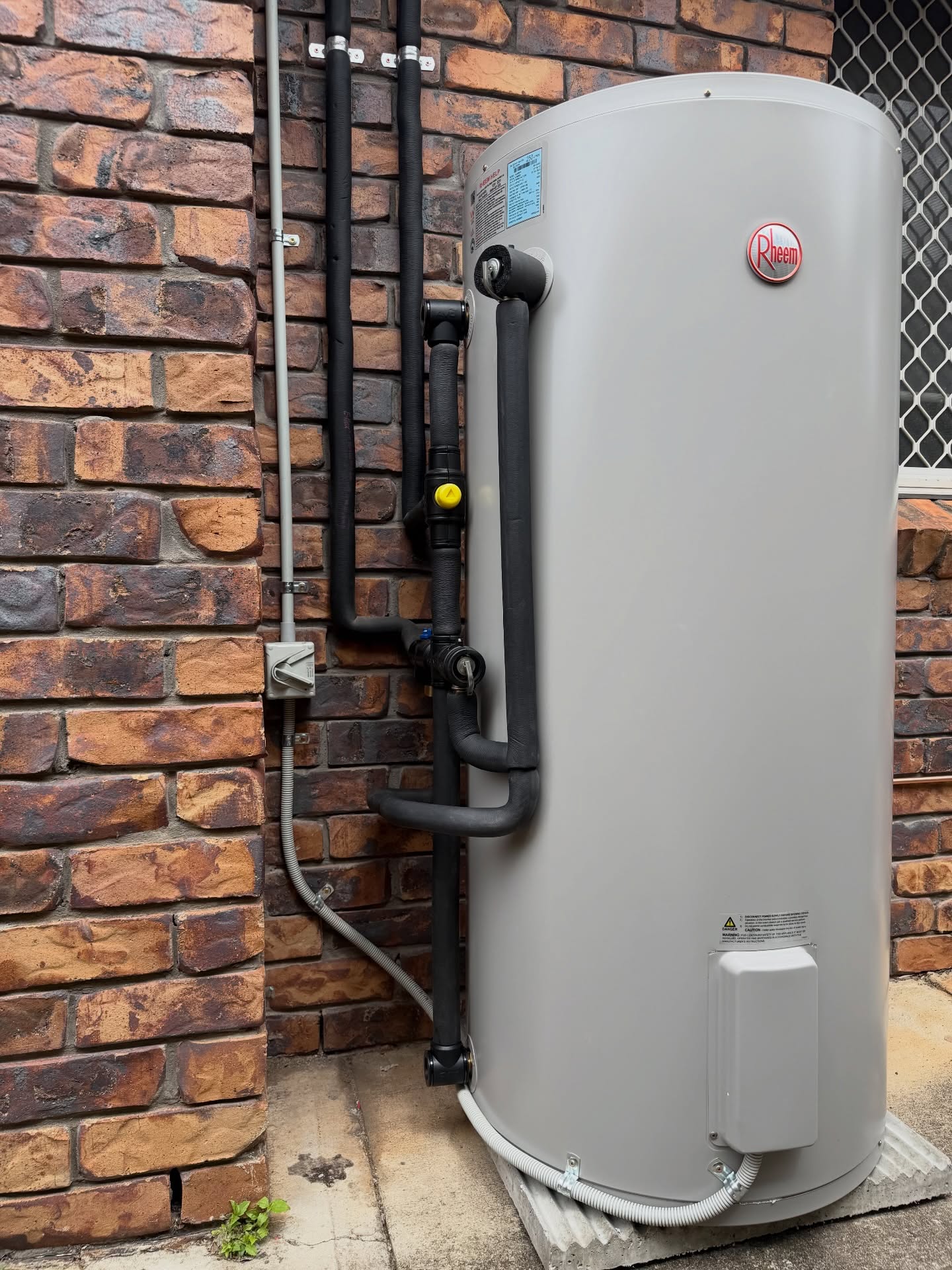
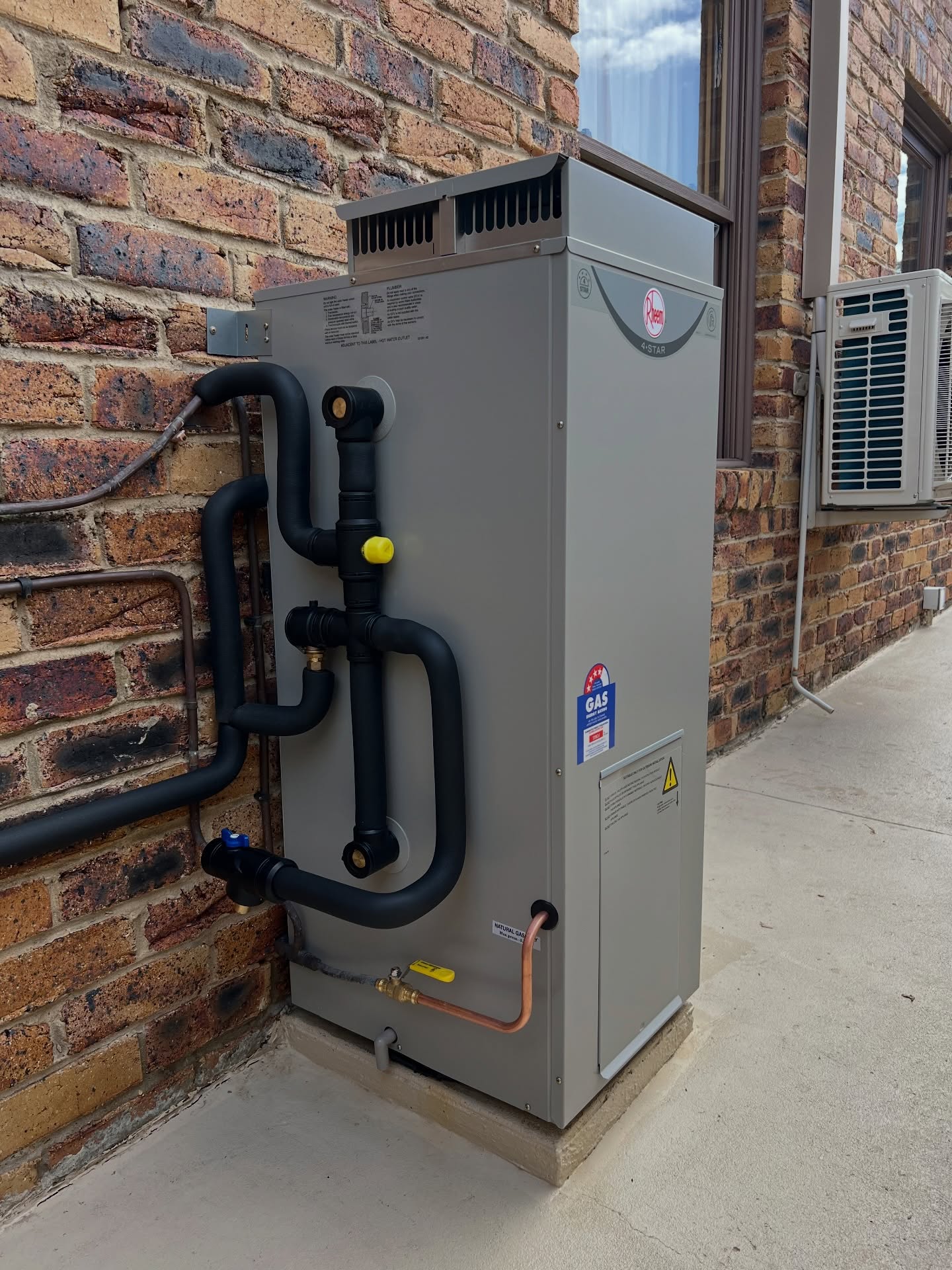
Electric storage tanks are still the most common hot water system I see across Brisbane Northside. They're cheap to buy, simple to install, and most homes already have one sitting outside.
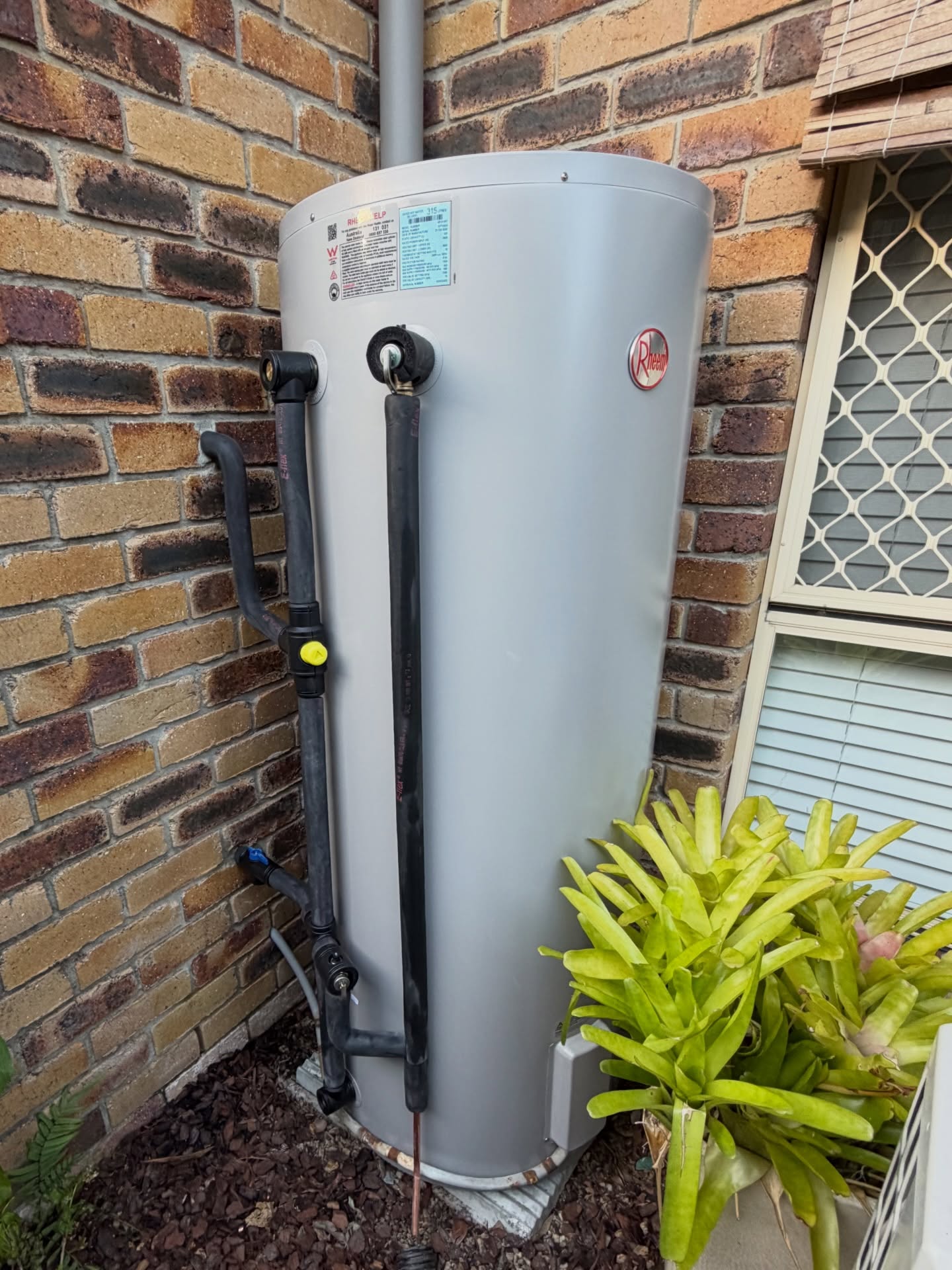
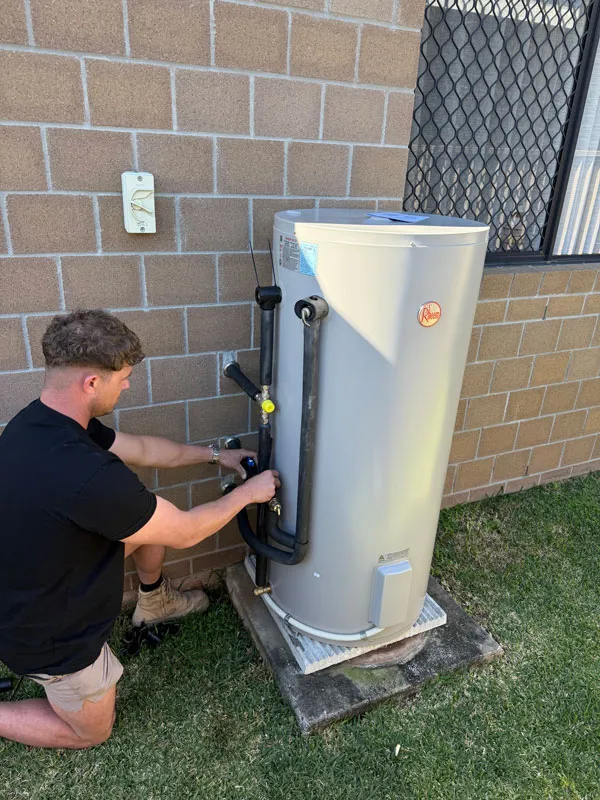
A good quality electric hot water system from a brand like Rheem or Dux will give you 10 to 15 years if it's looked after. Cheap budget tanks installed during a renovation rush can struggle to hit eight.
The two biggest things that kill an electric storage tank early are sediment buildup and a failed sacrificial anode. The anode is a metal rod inside the tank designed to corrode before the tank itself does. Once that rod is gone, the tank is on borrowed time.
I pulled an electric tank out of a place in Stafford a few months back. Thirteen years old. The owners had been getting brown water for nearly six months and just put up with it. When we got the anode out, it was a piece of wire. Tank was pinholed in three spots, soaked the bottom of the cabinet through to the floor joists. A simple anode check around year five would have given them another decade. Most homeowners never even know they have an anode, let alone replace it. Pulling it every five years and swapping it out can genuinely double the working life of a tank.
How long does a gas storage hot water system last?
Gas storage units run hotter and cycle harder than electric ones, so they tend to be on the lower end for lifespan. Eight to twelve years is the realistic window for a gas hot water system.
The old Vulcan beige boxes from the 90s were tanks. I serviced one at an Aspley rental last year that was 28 years old and still running. The owner had just kept swapping thermocouples every few years and never had a tank issue. Newer gas storage units don't get to that age. The control boards die first, and once a board is obsolete you're done. The pilot assembly, gas valve and burner are the common failure points well before the tank itself goes.
When customers ask whether to repair or replace a gas storage unit, my rule of thumb is age plus the cost of the repair. Past the eight-year mark, money spent on a new gas valve usually isn't a great investment.
If you're weighing up gas vs electric for your next system, I covered the full comparison in gas vs electric hot water systems in Brisbane.
How long does a continuous flow gas system last?
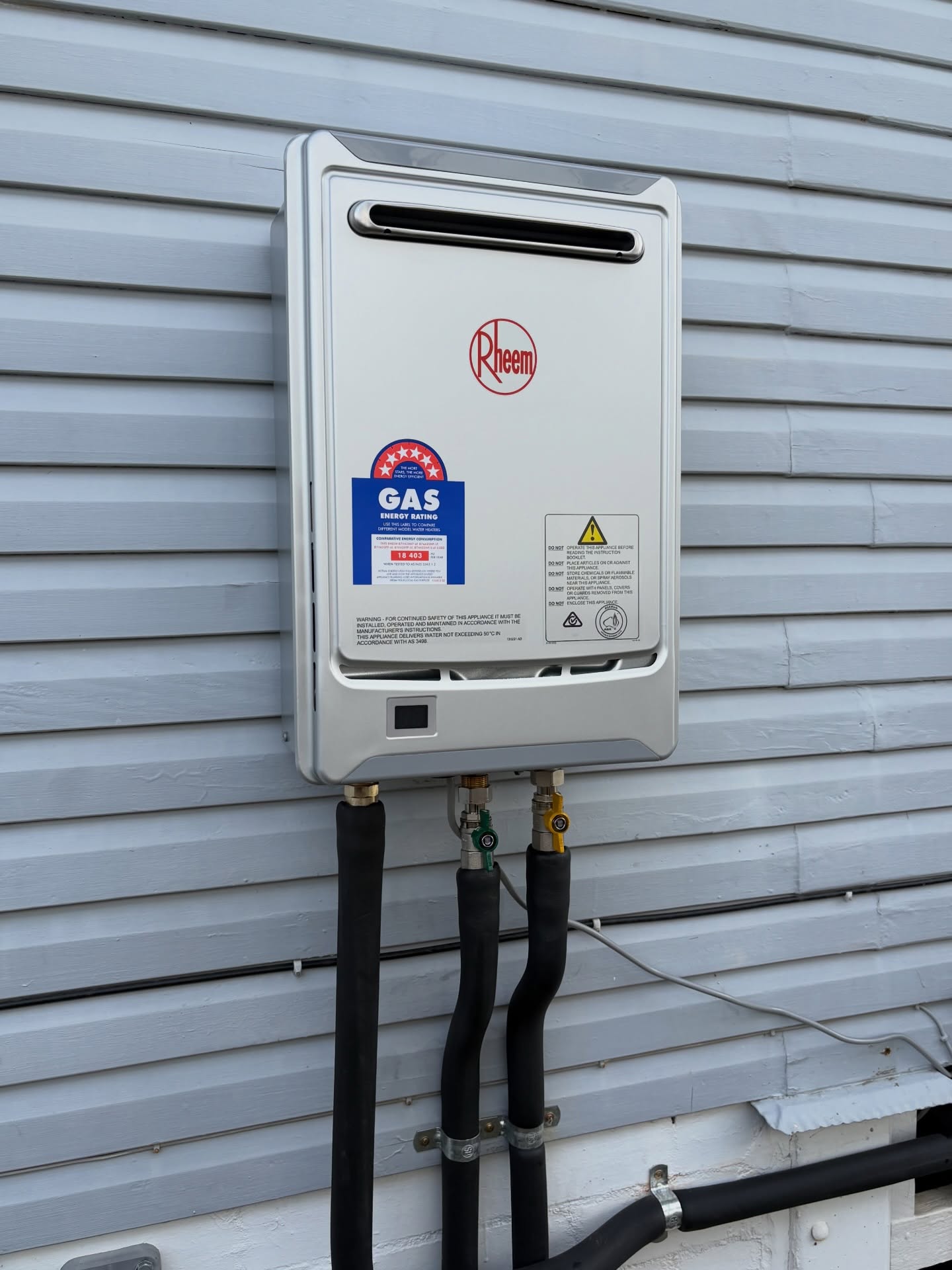
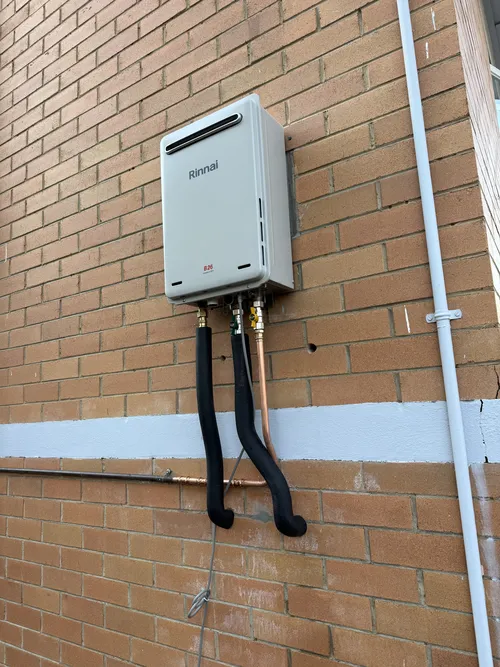
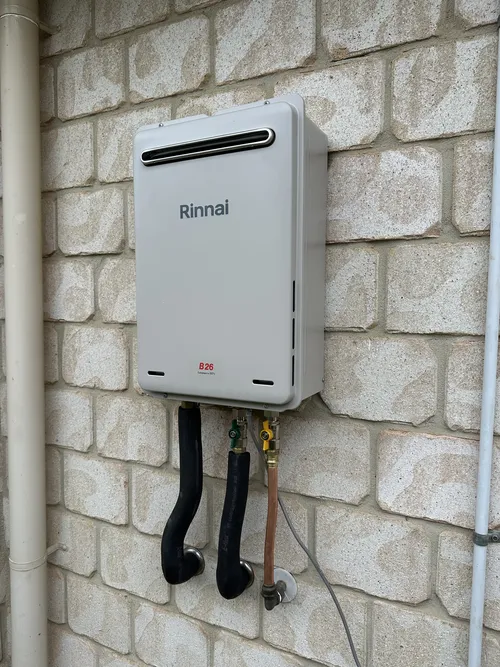
Continuous flow systems are the wall-mounted units, sometimes called instant or instantaneous gas. Because there's no tank to corrode, they tend to last considerably longer than storage units. A Rinnai Infinity or Bosch instant hot water unit installed properly in a sheltered spot can hit 18 to 20 years without too much drama.
What kills them early is usually one of three things:
- Mineral scale building up on the heat exchanger over time
- Insects nesting in the burner over winter (yes, really)
- Failed electronic ignition or PCB boards in older units
I had a Rinnai out at Burpengary last winter that wouldn't fire. Pulled the cover off and there was a wasp nest the size of a tennis ball blocking the burner assembly. Whole unit was fine once we cleaned it out and fitted a flue cowl. A $30 cowl would have stopped the problem before it started, but nobody told the owners that when it was installed seven years earlier.
Annual servicing makes a real difference here. The heat exchanger is the expensive part, and keeping it clean is the difference between getting another five years of service and replacing the whole thing.
How long does a solar hot water system last?
Solar hot water is a bit trickier because there are two parts: the collector panels on the roof and the storage tank below or beside them.
The panels themselves can last 20 years or more. They're sitting in the sun, that's the job. The tank, though, is just an electric or gas storage tank with extra plumbing, and it lasts about the same time as a regular storage tank. A solar hot water system typically gives you 10 to 15 years on the tank if you stay on top of the anode.
The two specific issues I see with older solar setups on Brisbane Northside roofs are tempering valves seizing up after a decade of being baked, and the boost element or gas booster failing. Neither is the end of the system, but homeowners who haven't had it serviced in years sometimes assume the whole setup needs replacing when it's really just the booster. I had a Ferny Hills customer ready to spend big on a complete swap-out last year, and the actual problem was a $180 booster element. The rest of the system had years left in it.
If you've got an old close-coupled solar tank on the roof, keep an eye on the supports and the area underneath it for any sign of moisture. A leaking roof-mounted tank is not a small problem.
How long does a heat pump hot water system last?
Heat pumps are the newest type, and they've been popping up everywhere on the Northside and around Moreton Bay since the federal STC rebate made them genuinely affordable.
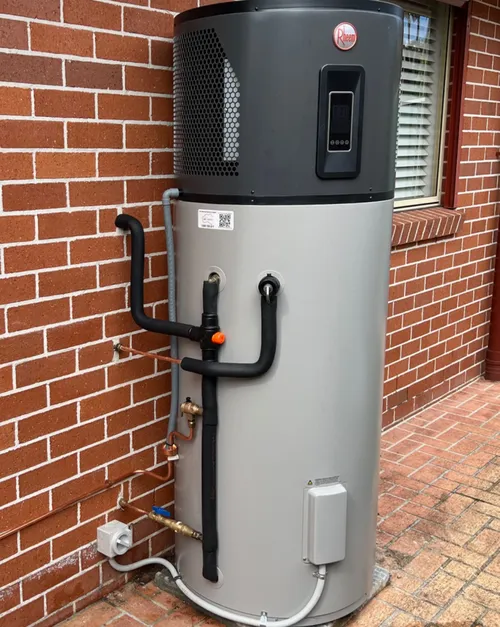
The good ones (Reclaim, Sanden, Rheem AmbiHeat) are tracking toward 15 years based on what I'm seeing in the field. Cheaper imported brands are a different story, and the early signs aren't always great. The compressor is the most expensive component in any heat pump hot water system, and once that goes on a budget unit, replacing the whole system usually makes more sense than fixing it.
Heat pumps don't love being installed in fully enclosed spaces or right against a hot wall in afternoon sun. They need airflow. First job I did at Mango Hill last spring, the customer rang to say her brand new heat pump was loud and not making proper hot water. The previous installer had wedged it 200mm from a Colorbond fence with another wall behind it. The compressor had nowhere to dump the cold air and was working flat out trying to. We moved the unit two metres into open space, the noise dropped, and the recovery time halved. Same unit, same brand, same temperature setting. Just airflow.
What affects hot water system lifespan in Brisbane Northside and Moreton Bay
A few things in our local area work against hot water systems specifically. Knowing about them upfront helps you choose the right system and the right spot for it.
Coastal corrosion
If you're a Moreton Bay homeowner, particularly in Redcliffe, Scarborough, Margate, Newport, Clontarf or out on Bribie Island, salt-laden air is real and it's working on your hot water unit 24 hours a day. Outdoor units in coastal locations can lose two to three years off the typical lifespan just from accelerated corrosion of the casing, fittings and external electronics.
I pulled an outdoor electric tank off a deck at Scarborough last year. Six years old. It looked twenty. The fittings on the back of it were so corroded I had to cut them off with an angle grinder rather than turn a spanner. The owners had no idea anything was wrong until the bottom of the tank started weeping.
If you're in those coastal suburbs, it's worth specifying a coastal-grade unit when you replace yours. Most major brands offer marine or coastal models with stainless steel internals and protective coatings on the outer casing. They cost a bit more upfront but they're a much better investment if you can taste salt in the air.
Water quality
South East Queensland water is not particularly hard compared to other parts of Australia, but there's still enough mineral content to cause sediment buildup over time. Sediment sitting at the bottom of a storage tank acts as an insulator, makes the heating element work harder, and accelerates tank corrosion.
A simple drain-down every few years clears most of it out. Most homeowners never have it done.
Installation quality
This one matters more than people realise. A hot water system installed without a proper tempering valve, with undersized fittings, or with poor pressure regulation will fail earlier and harder than one that's been put in properly. Brisbane has a lot of houses that have had hot water systems swapped over the years by various tradies, some better than others. I've seen tanks installed without a drain pan in upstairs cupboards, fittings teed into the wrong line, and outdoor units mounted without proper bracketing. All of it shortens the working life.
If you're replacing a system that didn't last as long as it should have, getting the installation done properly the second time around can make a real difference.
Temperature and pressure relief valve
The TPR valve is a safety device on every storage hot water system. It's meant to release pressure if the tank overheats. It's also a part that wears out, and a slow drip from the TPR is one of the earliest signs that something is not right.
A new TPR valve is cheap. Replacing the whole tank because nobody noticed it had been leaking for two years is not. Half the time when I'm called out for a tank that "suddenly" failed, there's a salt trail down the wall under the TPR going back at least a year.
Signs your hot water system is on the way out
Most hot water systems don't die suddenly. They give you warning signs for weeks or months. If you know what to look for, you can plan a replacement instead of getting caught out in a cold shower on a Tuesday morning.
The clearest signs that your system is nearing the end:
- Rust-coloured or cloudy hot water (especially in the first few seconds of running)
- Water that's lukewarm even on the highest setting
- Banging, popping or rumbling noises from the tank
- Visible rust or corrosion on the outside of the tank
- Pooling water around the base of the unit
- Hot water that runs out faster than it used to
- The unit is past its warranty by several years
The sound is the giveaway most people miss. A healthy storage tank is silent. A tank with a heavy sediment layer sounds like a kettle in slow motion, a low rumble or popping every time the element kicks in. By the time you can hear it from another room, the bottom is already coated.
A puddle under the tank is the one that means act now. Once a tank starts leaking, it's not getting better. If you spot pooling water and you're not sure where it's coming from, professional water leak detection can pinpoint it before it becomes a flooded laundry.
If your system has already failed and you've got no hot water at all, that's an emergency plumbing situation, especially in winter or with kids in the house.
How to extend your hot water system's lifespan
A few simple things make a genuine difference to how long your system lasts:
- Have the anode rod checked every five years and replaced when needed (storage tanks only)
- Get the unit serviced annually if it's a continuous flow gas or heat pump
- Drain a couple of litres from the tank every year or two to clear sediment
- Keep the area around the unit clear, especially for heat pumps that need airflow
- Don't ignore a dripping TPR valve, get it sorted
- Set the thermostat to 60 degrees, no hotter, to reduce stress on the tank
For homes across Brisbane Northside, that simple maintenance routine is the difference between a tank lasting 10 years and a tank lasting 15.
Repair or replace: when it's worth fixing an older system
This is the question I get asked the most. The general rule:
- Under 8 years old: usually worth repairing
- 8 to 10 years: depends on the repair cost and the part that has failed
- Over 10 years: usually better to replace
There are exceptions in both directions. A continuous flow gas unit at 12 years with a failed solenoid is often worth fixing because the rest of the unit is sound. An electric storage tank at six years with a leaking tank is not, because once the tank is gone, it's gone.
I covered this decision in detail in hot water system repair vs replacement in Brisbane, including how to weigh up the cost of common repairs against the value of a new install.
What to do when your hot water system finally dies
If your system has well and truly given up, the timeline matters. Replacing a hot water system isn't a same-afternoon job for most homeowners. Even when we have stock on the truck, a proper installation takes a few hours and may need permits depending on what's being installed and where.
Before you call, it helps if you can:
- Note the brand, model and capacity of your existing unit (helps with sizing the replacement)
- Check whether you've got existing connections for gas, electric or solar
- Think about whether you want to switch types (a lot of customers in Moreton Bay are moving from old electric tanks to heat pumps to claim the rebate)
- Have a look at where the existing unit sits and whether it's still the best location
If you're not sure which way to go on the replacement, we can come out, look at what you've got, and walk through your options. That's usually the easiest first step.
When to call a Brisbane plumber
Hot water system work is licensed in Queensland under QBCC regulations. Anything beyond a basic visual inspection (replacing elements, valves, fittings, the unit itself) needs to be done by a licensed plumber. Gas work also requires gas-specific licensing on top of the plumbing licence, which is why DIY hot water repairs on gas systems are both illegal and a genuinely bad idea.
If you're in any doubt about what your system is doing, get someone qualified to look at it. A short service call early can save you a full replacement.
For homeowners across the Northside and Moreton Bay, our team handles everything from anode replacements and servicing through to full hot water system replacements. If yours is making noises it shouldn't, leaking, or just running out of hot water faster than it used to, get in touch and we'll come take a look.
Knowing how long a hot water system should last gives you something most homeowners don't have: the chance to plan ahead instead of reacting. If your system is approaching the upper end of its expected lifespan, even if it's still working fine, it's worth thinking about what your next system will be before the current one forces the decision for you.
Frequently asked questions
How long does a hot water system last in Brisbane?
It depends on the type. Electric storage tanks last 10 to 15 years, gas storage tanks 8 to 12 years, continuous flow gas systems 15 to 20 years, solar hot water tanks 10 to 15 years, and heat pumps 10 to 15 years. Coastal locations and lack of servicing can shorten these timeframes.
Do hot water systems last longer if you live near the coast in Moreton Bay?
No, the opposite. Salt-laden coastal air in suburbs like Redcliffe, Scarborough, Margate and Bribie Island accelerates corrosion of outdoor hot water units. Coastal homes can lose two to three years off the typical lifespan unless a marine or coastal-grade system is installed.
How often should I replace the anode rod in my hot water system?
The sacrificial anode rod in a storage hot water tank should be checked every five years and replaced when it has corroded down. Replacing the anode at the right time can genuinely double the working life of a storage tank.
What is the most common reason a hot water system fails early?
The most common reason is a fully corroded anode rod that was never replaced, leaving the tank itself to corrode from the inside. Other common causes are sediment buildup, coastal corrosion of the casing, and ignored leaks from the temperature and pressure relief valve.
Should I repair or replace my old hot water system?
Generally, systems under 8 years old are worth repairing, systems 8 to 10 years old depend on the cost and which part has failed, and systems over 10 years old are usually better replaced. The exception is continuous flow gas units, which can often be repaired well into their teens because the heat exchanger is the only part that really matters long-term.
How can I tell if my hot water system is dying?
Common warning signs include rust-coloured or cloudy hot water, lukewarm water on the highest setting, banging or rumbling noises from the tank, visible rust on the outside, pooling water around the base, and hot water running out faster than it used to. A puddle under the tank means act now.